
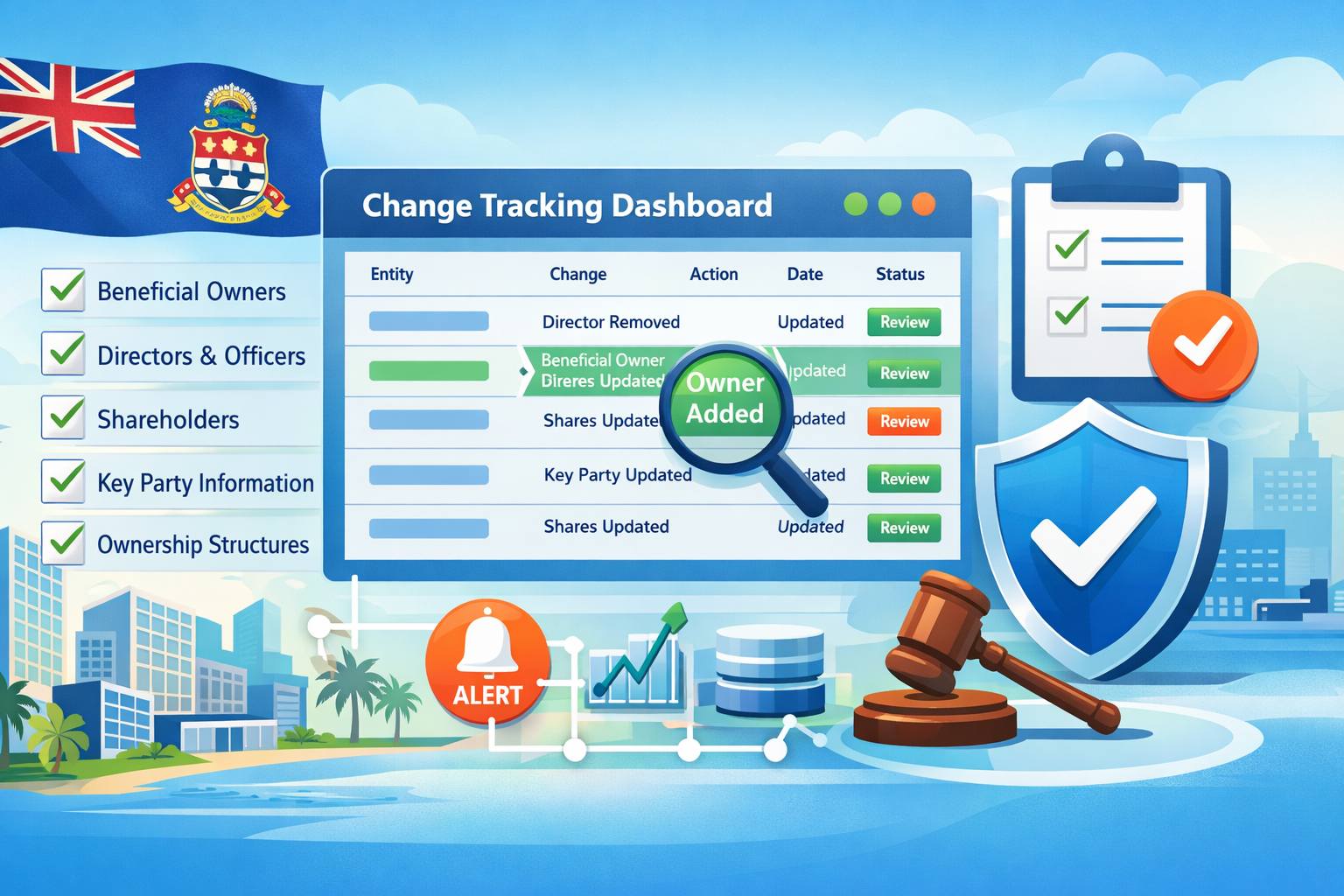
Cayman CSP material changes — such as updates to beneficial owners, directors, or shareholders — must be monitored and reported under CIMA regulation.
These can include changes to:
- Beneficial owners
- Directors or officers
- Shareholders
- Key party information
- Ownership structures
For firms managing large portfolios of entities, identifying these changes quickly and ensuring they are properly reviewed and reported can be challenging.
CSPs handle notifications to CIMA or the Registrar of Companies for changes like directors (within 30 days), beneficial ownership (within 30 days), or fund details (within 21 days), with penalties for non-compliance up to US$24,390 or more.
Data Guardian addresses this through a structured change‑tracking framework.
Tracking Cayman CSP Material Changes with Data Guardian
A change tracking framework focuses only on meaningful data changes. Instead of logging every action, it identifies when specific monitored data points change and turns those changes into reviewable events.
For example:
- Beneficial owner added
- Director removed
- Shareholder percentage updated
- Ownership structure modified
Each change becomes a structured item that can be reviewed and processed. So rather than thousands of raw system events, teams see a small list of relevant changes that may require action.
When monitored data points change—such as the addition or removal of a beneficial owner—Data Guardian automatically records the event and presents it in a centralized Change Tracking dashboard.
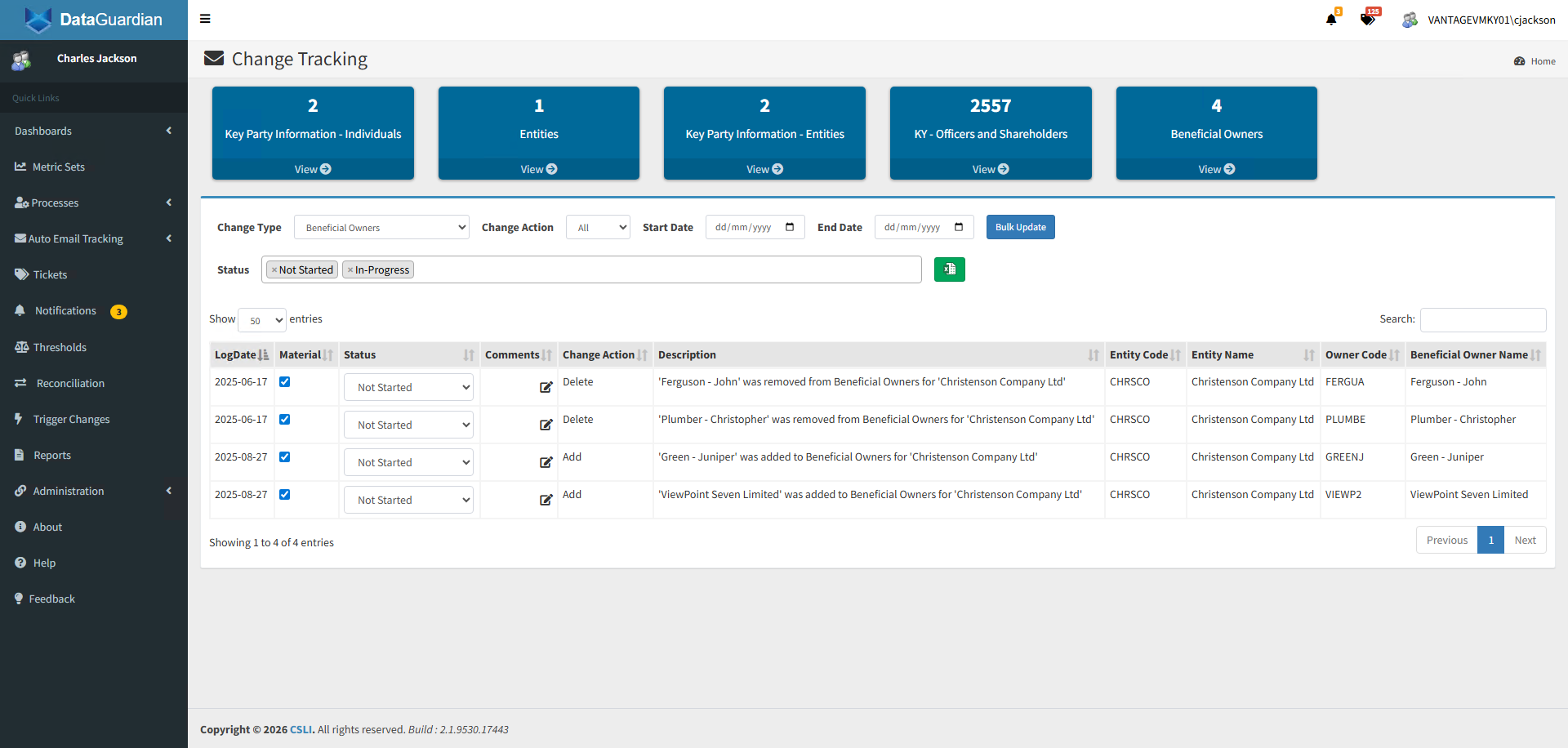
Typically, it shows:
- What changed
- Which entity it relates to
- The action type (add / remove / update)
- When it occurred
- Review or approval status
Teams can then review, comment on, and progress each change through their internal process, ensuring that any material changes requiring regulatory notification are identified and handled promptly.
This approach provides a clear audit trail and helps corporate service providers maintain consistent oversight of regulatory obligations across their entire entity population.
This is distinct from an event log that captures every event triggered in a system. The main difference is purpose and structure.
A simple way to think about it
Event log:
“Everything that happened in the system.”
Change tracking:
“Important data changes that people need to review.”
Why the distinction matters
For corporate service providers managing many entities:
- An event log is useful for technical auditing.
- Change tracking is useful for operational oversight and regulatory compliance.
It helps teams quickly answer questions without having to sift through a large technical log/report like:
- Did a beneficial owner change?
- Has ownership shifted, e.g. from 10% to 25%?
- Do we need to notify the regulator of a new director appointment/resignation on a regulated entity?
Learn more at Vantage – Data Guardian